
(Florence, 1856; Ibid, 1928)
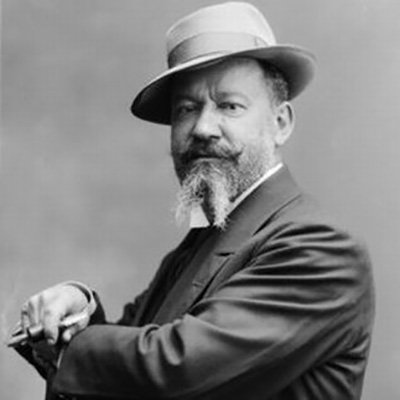
He was the son of the sculptor Pasquale Romanelli. Raffaello began sculpting in his father’s workshop, initially adhering to the Naturalist and Verist trend. After spending some time at sea, he enrolled at the Accademia di Belle Arti in Florence, where he followed the courses of Augusto Rivalta and Emilio Zocchi and immediately caught their attention, winning numerous prizes including the 1876 annual competition with the bas relief «Giacobbe e Rachele al pozzo» ( Jacob and Rachel at the well), the 1878 competition for live study, and in 1879 the annual competition once again. He managed to get a scholarship which allowed him to continue studying in Rome where he won the Pensionamento nazionale with «L’indemoniata ai piedi di Cristo» ( Possessed woman at Christ’s feet). In the following years he specialized in portraits, genre scenes and animals. However, he was also the creator of celebratory and funerary works. In the final years of the nineteenth century he realized important celebratory works like the monument to Donatello in the church of San Lorenzo in Florence, the equestrian statue of Garibaldi in Siena, the statue of Carlo Alberto on horseback in Rome, and the bronze bust of Benvenuto Cellini commissioned by the goldsmiths of Ponte Vecchio in Florence on the occasion of the IV Centenary of the birth of the artist. He also created funerary monuments in some of the most important cemeteries in Tuscany like the Cemetery of Pisa, the cemetery of San Miniato and the one in Porte Sante in Florence.
In addition to regularly taking part in the Florentine exhibitions, he also showed his works in Rome, Turin, Paris, and San Francisco. He also obtained important commissions for monuments abroad like the mausoleum of Alexandro Joan Cusa in Romania, the Demidoff monument in Kiev, the monument to General Martín in Caracas and the one to Botha in Cape Town which was completed by his son Romano after his death. In addition to sculpting he also taught at the Accademia di Belle Arti of Florence.
Giulia Stagi