
(Sesto Fiorentino – FI, 1879; Florence, 1958)
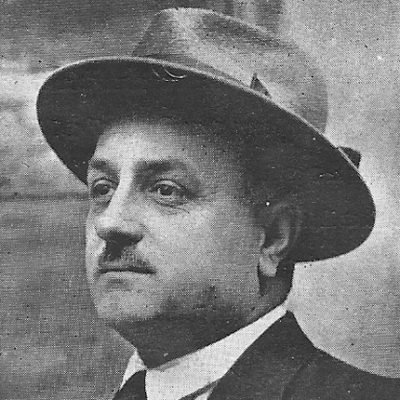
Odo Franceschi was born in Sesto Fiorentino in 1879. He was a student of Emilio Zocchi, Augusto Rivalta and Urbano Lucchesi, he began studying at the Scuola Professionale d’arte in his home town, and went on to finish his training at the Accademia di Belle Arti in Florence and at the Scuola Libera del Nudo.
He was also a ceramist,and collaborated with the Ginori artistic studio. In 1921 he became a partner of a small firm which produced ceramics, terra cotta objects and porcelain. He taught at the Scuola d’Arte in Sesto Fiorentino, and was the author of portraits, genre works, public monuments and funerary works. He began his artistic career at a very young age, and in 1904 he created the monument to «Umberto I» in Castello.
In the 1920s he was commissioned to create several Monuments to the Fallen in various towns in the Province of Florence and Prato: Mercatale Val di Pesa (destroyed), San Casciano Val di Pesa (1923, destroyed), Monteridolfi Val di Pesa, Montemurlo (1924), Barberino Val d’Elsa (1926), Cerbaia (1928, destroyed), Castello (1923) and Sesto Fiorentino (1925).
It was for Sesto Fiorentino that he built the monument to «Carlo Ginori» (1930, destroyed), of which only the bust remains and is preserved in the Museo di Doccia in Sesto Fiorentino. In Barberino Val d’Elsa he realized the monument to the poet «Francesco da Barberino» (destroyed) and for San Casciano Val di Pesa he made the plaque dedicated to the Minister Sidney Sonnino.
He was the author of numerous funerary monuments situated in the cemeteries of Tolentino, San Casciano Val di Pesa, Sesto Fiorentino, Rifredi, Fiesole, Soffiano, Antella, Trespiano and San Miniato. In Passo del Giogo (Scarperia) he created the monument to the American Soldier «Milite americano»: the mausoleum built to honour those who fell on the Gothic Line during World War II was destroyed in the 1960s, and all that remains of it today is the travertine structure, while a copy of the statue which portrayed a soldier at resti is situated in the Falciani American Cemetery near Florence. In 1909 he won First Prize at the Esposizione Donatelliana of Livorno with the work «Stanco» (Tired), in1917 he won a prize at the Esposizione del Soldato in Florence and in 1931 he won at the Esposizione of Montecatini Terme.
In the Art Gallery of Ravenna his bronze «Caino» (Cain) is on show, while the busts of «Padre Timoteo Bertelli» and «Urbano Lucchesi» can be found at the Art Gallery of Lucca.
The artist died in Florence in 1958.
Federica Tiripelli